Why Most Paint Jobs Fail
The number one reason paint peels, bubbles, or looks patchy within a year isn't the paint, it's the preparation underneath. Filling cracks incorrectly, skipping sanding, leaving dust on the surface, or not priming properly are all shortcuts that show up later. Michael's philosophy is simple: take the time to do it right the first time, so it lasts.
"A great finish is 80% prep and 20% paint. If you get the foundation wrong, the rest doesn't matter."
Michael Falcone
What Proper Preparation Looks Like
Michael follows a rigorous multi-step preparation process to ensure every surface is perfectly ready for paint.
Crack & Hole Filling
All cracks, holes, and imperfections are filled with the correct compound for the surface type like walls, plaster, render, or timber.
Sanding
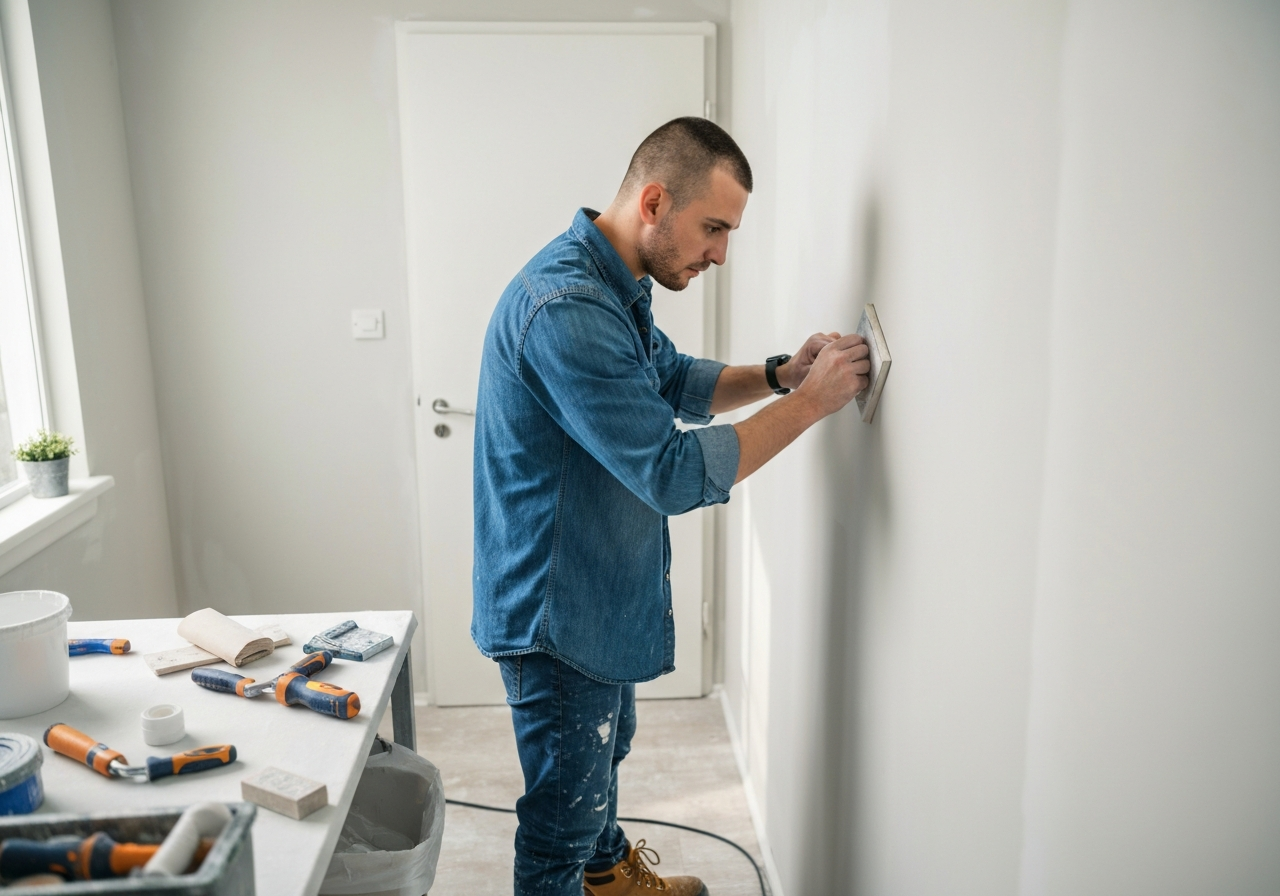
Every patched area and any rough surface is sanded back to a smooth, even finish that paint can properly adhere to.
Dust Removal
All sanding dust is fully removed before painting begins, this is a step many painters skip that causes visible imperfections.
Priming
Bare patches, repaired areas, and high-porosity surfaces are primed before painting to ensure an even, lasting result.
Good Prep. Great Finish.
If you want a result that actually lasts, it starts with the preparation. Call Michael for a free quote.